Category: Ibuyer Feed

Category Added in a WPeMatico Campaign

Realtor Fees in Indiana: Costs, Savings Tips & Breakdown

Wondering how much you’ll pay in realtor fees when selling your Indiana home? It’s a common question—and for good reason. Realtor fees can take a significant chunk out of your home sale profits. Knowing exactly how these fees work is essential for keeping more money in your pocket.

When you understand what goes into realtor commissions, you’ll be in a stronger position to make smart decisions, whether that means negotiating fees, exploring alternatives, or choosing a faster way to sell.

If you’re looking to sell your home quickly while minimizing fees, iBuyer.com can help. With a streamlined process and competitive offers, iBuyer.com makes it simple to get your home sold without the hassle of traditional fees.

Compare Cash Offers from Top Home Buyers.
Delivered by Your Local iBuyer Certified Specialist.

    One Expert, Multiple Offers, No Obligation.

    What Are Realtor Fees and How Do They Work?

    Realtor fees, often called commissions, are payments made to real estate agents for their services in helping you sell or buy a home. These fees are typically calculated as a percentage of the final sale price of the property, meaning the more your home sells for, the higher the commission.

    Here’s how it works:

    • The total commission is usually split between the seller’s agent (the agent helping you sell your home) and the buyer’s agent (the agent representing the buyer).
    • For example, if the total commission is 6%, the seller’s agent and buyer’s agent might each get 3%.
    • This split incentivizes both agents to market the home effectively and negotiate a successful sale.

    It’s also worth noting that realtor fees don’t go entirely to the agents. A portion of the commission often goes to their real estate brokerage, covering business expenses like office costs, licensing fees, and marketing.

    Understanding this breakdown helps you see where your money is going and gives you a better starting point for negotiations or exploring alternative selling options.

    Average Realtor Fees in Indiana

    In Indiana, realtor fees typically range between 5% and 6% of the home’s final sale price. This is in line with the national average, which also falls in the 5%-6% range. However, the exact percentage can vary depending on factors like your location, market conditions, and your agent’s level of experience.

    Here’s a quick breakdown:

    • Statewide Average: 5%-6% commission
    • For a $300,000 Home Sale: Total fees could amount to $15,000 to $18,000
    • Split Between Agents: Each agent might receive around 2.5% to 3%

    Regional Differences in Indiana

    • Northwest Indiana: With its proximity to Chicago, this area often sees competitive markets, which could influence commission rates.
    • Indianapolis: As the largest housing market in the state, commissions here may be slightly more flexible due to higher competition among agents.
    • Smaller Towns and Rural Areas: Fees are generally consistent, but agents in less competitive markets may stick closer to the 6% mark to ensure they’re compensated for their efforts.

    When comparing Indiana’s fees to the national average, it’s clear that homeowners in the state aren’t paying significantly more. However, saving even a small percentage can translate into thousands of dollars back in your pocket.

    Who Pays Realtor Fees in Indiana?

    In Indiana, the seller typically covers the realtor fees for both the seller’s agent and the buyer’s agent. This is a standard practice across the U.S., and it’s negotiated as part of the listing agreement when the seller hires a real estate agent.

    Here’s how it works:

    • When the home is sold, the commission is deducted from the seller’s proceeds at closing.
    • The seller’s agent then splits the total commission with the buyer’s agent, as agreed upon beforehand.

    How Does This Affect the Buyer?
    While buyers don’t directly pay realtor fees, they still play a role. Because the seller factors these commissions into the home’s listing price, buyers indirectly pay for realtor fees through the purchase price.

    To put it simply:

    • Sellers “pay” the commissions upfront, but
    • Buyers contribute by paying a slightly higher price for the home.

    Understanding this helps both buyers and sellers see how realtor fees fit into the overall home sale process. For sellers, it’s a cost to account for when calculating profits. For buyers, it explains why negotiating on price becomes important.

    Factors That Affect Realtor Fees

    Realtor fees in Indiana aren’t set in stone—they can vary based on a range of factors. Understanding these influences can help you identify opportunities to negotiate or save on costs.

    1. Home Sale Price
    The price of your home directly impacts the commission amount. Since fees are percentage-based, higher-priced homes result in larger payouts for agents, which may give you more leverage to negotiate a lower rate.

    2. Local Market Conditions

    • Hot Markets: In competitive markets where homes sell quickly, agents might be more willing to reduce their commission rates.
    • Slower Markets: If homes are sitting longer, agents may work harder to market the property, and commission rates are more likely to stay firm.

    3. Agent Experience and Services
    Top-performing, highly experienced agents often charge higher fees because they bring proven results, strong negotiation skills, and comprehensive marketing strategies. On the other hand, newer agents might be more flexible on fees to build their portfolio.

    4. Level of Service Provided
    Realtor fees often reflect the services included, such as:

    • Professional photography and marketing campaigns
    • Open houses and showings
    • Negotiation and paperwork handling

    If you’re comfortable with a more limited service, you may be able to find agents offering reduced commission rates.

    5. Negotiability of Rates
    It’s important to know that commission rates are not fixed. While many agents stick to the 5%-6% range, you can always negotiate:

    • Some agents may lower their fees if you’re buying and selling through them.
    • Others might offer a discount if you’re selling a higher-priced property.

    By understanding these factors, you’ll have a clearer sense of what’s fair and where you might be able to save on realtor fees during your Indiana home sale.

    Ways to Save on Realtor Fees in Indiana

    Realtor fees can take a big bite out of your profits, but the good news is there are ways to reduce those costs. Here are some practical strategies to save on realtor fees when selling your Indiana home:

    1. Negotiate Commission Rates
    Realtor fees are not set in stone. Here’s how you can negotiate:

    • Ask for a lower percentage—especially if you have a high-value property.
    • Offer to handle some tasks yourself, like staging or hosting open houses, to lower the agent’s workload.
    • Bundle services: If you’re buying and selling through the same agent, they may offer a discount on their commission.

    2. Use Flat-Fee Realtors
    Flat-fee realtors charge a set rate rather than a percentage of the sale price. In Indiana, this option allows you to save money, especially if you’re selling a higher-priced home.

    • Example: Instead of paying 6% on a $300,000 home ($18,000), a flat-fee agent might charge a set $4,000-$5,000.
    • Keep in mind: Flat-fee services might offer fewer perks, so make sure to check what’s included.

    3. Sell Your Home For Sale By Owner (FSBO)
    If you’re confident about handling the sale yourself, FSBO can eliminate the seller’s agent commission entirely. However, there are pros and cons:

    • Pros: No seller’s agent fees, more control over the process.
    • Cons: You’ll still need to offer a buyer’s agent commission, and you’re responsible for pricing, marketing, showings, and paperwork.

    4. Work with Discount Real Estate Agents
    Some agents and platforms, and other online real estate companies, offer reduced commission rates or rebates. While they provide savings, they may offer limited services compared to full-service agents.

    5. Consider iBuyer Services
    If you want to skip commissions altogether and sell your home quickly, iBuyer.com is a great alternative. iBuyer services provide competitive offers for your home without the hassle of traditional fees. Plus, you’ll save time and avoid the stress of showings, negotiations, and paperwork.

    By exploring these options, you can make smarter decisions and potentially save thousands of dollars on realtor fees, keeping more money from your home sale in your pocket.

    Reilly’s Two Cents

    When it comes to saving on realtor fees, a little strategy goes a long way. Here are my personal tips to help you get the most value from your home sale while keeping costs in check.

    1. Compare Commission Fees Among Agents
    Not all agents charge the same fees, so take the time to shop around. Ask multiple agents for their rates and compare their services. A lower fee doesn’t always mean better value—look for agents who offer competitive rates while still delivering quality service, like professional photography, strong marketing, and negotiation expertise.

    2. Negotiate for Full-Service Value
    Realtors provide more than just putting your home on the market. If you’re paying full commission, make sure you’re getting full-service value, such as:

    • High-quality photos and videos
    • Aggressive online marketing
    • Open houses and showings
    • Guidance through inspections, negotiations, and closing paperwork

    Don’t be afraid to ask, “What’s included in your fee?” You’re paying for expertise, so ensure your agent earns every dollar.

    3. Use iBuyer Services to Skip Commissions Altogether
    If you’re looking to avoid realtor fees entirely, consider using an iBuyer service like iBuyer.com. iBuyer makes selling fast, simple, and stress-free:

    • You get a competitive offer for your home without listing it.
    • You avoid traditional commissions, showings, and negotiations.
    • It’s perfect if you need to sell quickly and move on to your next chapter.

    With so many options on the table, you don’t have to settle for high realtor fees. Compare, negotiate, and explore alternatives to maximize your profit while selling your home smoothly.

    Conclusion

    Understanding realtor fees is a key part of maximizing your profits when selling your home in Indiana. While traditional commissions typically range from 5% to 6%, you now know there are ways to save. From negotiating rates to exploring options like flat-fee realtors or FSBO, small changes can lead to big savings.

    If convenience and speed are your top priorities, iBuyer.com offers a streamlined solution. With competitive offers and no traditional commissions, iBuyer simplifies the process and helps you sell your home quickly and hassle-free.

    By being informed and weighing your options, you can take control of your home sale, save money on fees, and keep more of your hard-earned cash in your pocket.

    Instant Valuation, Confidential Deals
    with a Certified iBuyer.com Specialist.

      Sell Smart, Sell Fast, Get Sold. No Obligations.

      FAQ

      What percentage do realtors charge in Indiana?

      Realtors in Indiana typically charge between 5% and 6% of the final sale price of the home. This fee is usually split between the seller’s agent and the buyer’s agent.

      Can you negotiate realtor fees?

      Yes! Realtor fees are not set in stone. You can negotiate a lower commission, especially if your home is high-value or you’re willing to take on some tasks yourself, like staging or marketing.

      Do buyers pay realtor fees in Indiana?

      Technically, no. The seller usually pays the realtor fees for both the buyer’s agent and the seller’s agent. However, buyers indirectly contribute to these fees through the purchase price of the home.

      Are flat-fee realtors a good option in Indiana?

      Flat-fee realtors can be a great way to save money, especially for higher-priced homes. Just be sure to check what services are included, as they may offer less support compared to traditional agents.

      What is an iBuyer, and how can it save me money?

      An iBuyer is a company that makes direct, competitive offers on homes, allowing you to sell quickly without listing it traditionally. With services like iBuyer.com, you can skip realtor fees, showings, and negotiations, helping you save both time and money.

      The post Realtor Fees in Indiana: Costs, Savings Tips & Breakdown appeared first on iBuyer Blog.

      Powered by WPeMatico
      36 Real Estate Facts to Navigate the Housing Market

      Nearly 90% of homebuyers use online tools during their search for a home. It’s no surprise—real estate is a world full of data, trends, and fascinating quirks that keep buyers and sellers on their toes. Whether you’re casually browsing Zillow or seriously considering selling your property, understanding the market can make all the difference.

      In this article, we’ll uncover 50 real estate facts you need to know. From mind-blowing stats about homeownership trends to intriguing historical trivia, and even practical insights to guide your next move, we’ve got it all covered.

      If you’re thinking about selling your home and want a fast, stress-free experience, look no further than iBuyer.com. We make selling easy and efficient, so you can focus on what matters most.

      Instant Valuation, Confidential Deals
      with a Certified iBuyer.com Specialist.

        Sell Smart, Sell Fast, Get Sold. No Obligations.

        Eye-Catching Real Estate Statistics

        1. The U.S. homeownership rate stands at 65.6% as of late 2024.
          While a significant improvement from the 1940s, homeownership remains a challenge for many due to rising home prices and interest rates.
        2. The average new single-family home size is 2,411 square feet in 2023, down from a peak of 2,467 in 2015.
          Recent trends show buyers prioritizing energy efficiency and affordability over sheer space.
        3. Real estate contributes nearly 17% to the U.S. GDP.
          This includes residential construction, home sales, and housing services—showing the industry’s massive economic footprint.
        4. Millennials now account for 43% of homebuyers, despite ongoing affordability challenges.
          They’re reshaping the market, often favoring suburban homes and prioritizing community amenities.
        5. Homes spend an average of 22 days on the market, a sharp contrast to 58 days just a few years ago.
          This reflects a faster-paced market, driven by digital platforms and intense demand in many areas.
        6. The U.S. real estate market’s total value exceeds $3.9 trillion.
          Real estate continues to be a cornerstone of personal wealth and a critical investment avenue.

        Fun and Quirky Real Estate Insights

        1. The White House cost $232,372 to build in 1800, equivalent to $5 million today.
          A modest sum compared to modern construction costs, especially for a residence of such historic and symbolic significance.
        2. Nicolas Cage once owned a haunted mansion in New Orleans to inspire horror stories.
          The famous LaLaurie Mansion is steeped in spooky history and drew Cage’s fascination—though he sold it a few years later.
        3. In Scotland, homeowners paint their front door red when they pay off their mortgage.
          This age-old tradition celebrates the joy of financial freedom and homeownership pride.
        4. The narrowest house in London is just 6 feet wide!
          Located in Shepherd’s Bush, this quirky home makes ingenious use of every inch of space.
        5. Monopoly, the iconic real estate board game, has sold over 275 million copies worldwide.
          It’s inspired countless family debates about the value of Boardwalk and Park Place.
        6. The most expensive home ever sold was a $238 million New York penthouse.
          This record-breaking property, purchased in 2019, overlooks Central Park and redefines luxury living.
        7. The term “real estate” comes from the Latin word “rex,” meaning “royal.”
          Historically, all land was owned by the monarchy, and the term reflects its regal origins.

        Real Estate Trends You Should Know

        1. Over 70% of buyers now consider sustainability and green certifications when purchasing a home.
          Eco-friendly homes with energy-efficient appliances, solar panels, and sustainable materials are in high demand.
        2. Virtual home tours have grown by over 300% since 2020.
          The pandemic accelerated the adoption of digital tools, and buyers now expect immersive, online experiences before committing to in-person visits.
        3. The iBuyer model accounts for approximately 5% of U.S. home sales.
          Companies like iBuyer.com are transforming the way homes are bought and sold, offering speed and convenience for sellers.
        4. The tiny home movement is booming, with demand rising by 67% since 2021.
          Downsizing for simplicity, affordability, or sustainability, these micro-homes are winning over minimalists and adventurers alike.
        5. Smart home technology is a top feature for buyers in 2024.
          From voice-controlled lighting to app-based security systems, tech-savvy homes are a hot trend, adding convenience and peace of mind.

        Reilly’s Two Cents

        As a licensed real estate agent in Florida, I’ve seen the market from every angle—highs, lows, bidding wars, and the joy of finding “the one.” Whether you’re buying or selling, a little strategy can go a long way. Here are my top tips, based on experience, to help you navigate the real estate maze.

        Maximize the Use of Online Tools

        1. Dive into virtual tours and 3D walkthroughs.
          Before setting foot in a property, use online tools to explore its layout and condition. This saves time and helps you prioritize the best options.
        2. Leverage comparison sites.
          Platforms like Realtor.com or Zillow allow you to check recent sales in the area and compare pricing. Always look for properties with similar square footage, age, and features to gauge accurate value.
        3. Use pricing calculators.
          Tools like mortgage calculators can help you understand affordability, factoring in taxes and interest rates, before you start making offers.

        Understand Home Valuations

        1. Learn the basics of Comparative Market Analysis (CMA).
          A CMA compares your home to similar properties recently sold in the same area. This is the foundation for setting the right price.
        2. Don’t rely solely on automated valuations.
          Online tools like Zestimate provide a good starting point, but nothing replaces a professional appraisal or agent’s expertise to determine a home’s true value.
        3. Keep an eye on the market temperature.
          A seller’s market? Price higher. A buyer’s market? Stay competitive. Market conditions heavily influence valuation strategies.

        Avoid Common Real Estate Pitfalls

        1. Don’t get caught in a bidding war without limits.
          Emotional buying often leads to overpaying. Set your max budget and stick to it, no matter how tempting a counteroffer might be.
        2. Time the market carefully.
          Spring often sees higher selling prices, while fall may offer buyers better deals. However, your unique circumstances should guide your decision.
        3. Budget for repairs and unexpected costs.
          Whether it’s replacing a roof or addressing inspection findings, always have a contingency fund for repairs when buying or selling.

        Why Knowledge is Power in Real Estate

        Buying or selling a home isn’t just about luck—it’s about being informed. With real estate facts at your fingertips, you can make smarter decisions, avoid common pitfalls, and even maximize your profits. Here’s why staying informed matters:

        1. 36% of home sellers worry about managing repairs before selling their homes.
          Understanding what buyers look for—like fresh paint, functional appliances, and curb appeal—can help reduce this stress. A little preparation goes a long way.
        2. The average homeowner stays in their house for eight years before selling.
          Knowing when to sell often means considering life changes and market conditions to get the timing just right.
        3. Homes sold in spring tend to sell for 6% more than those sold in winter.
          If you have flexibility, timing your sale for peak demand can significantly impact your bottom line.
        4. Repainting is the most popular home improvement before selling, done by 30% of sellers.
          A fresh coat of paint offers a great return on investment, making the home look clean and inviting for prospective buyers.

        Conclusion

        Real estate is more than just buying and selling homes—it’s about understanding the market, making informed decisions, and staying ahead of trends. Whether you’re a first-time buyer, a seasoned seller, or just someone fascinated by the industry, these 50 must-know facts reveal just how dynamic and essential real estate is.

        For homeowners, the process of selling can often feel overwhelming. That’s where iBuyer.com steps in. With their streamlined approach, competitive offers, and hassle-free process, they make selling your home simpler than ever.

        Want to skip the hassle and sell your home fast? Let iBuyer.com help you take the next step today.

        Compare Cash Offers from Top Home Buyers.
        Delivered by Your Local iBuyer Certified Specialist.

          One Expert, Multiple Offers, No Obligation.

          FAQ Section

          What is the current state of the U.S. real estate market?

          The market remains competitive, with strong buyer demand driving up prices in many areas. However, trends like rising interest rates are creating more balanced conditions in 2024.

          How many homes does the average American own in a lifetime?

          The average American owns three homes over their lifetime, reflecting major life changes like career moves or growing families.

          What are the best cities for first-time homebuyers?

          Cities like Raleigh, NC, and Grand Rapids, MI, consistently rank highly for affordability, strong job markets, and quality of life.

          How can I sell my home quickly and for a fair price?

          Using iBuyer.com is one of the fastest ways to sell. They provide competitive offers without the hassle of showings, open houses, or extensive repairs.

          What’s the impact of mortgage rates on the housing market today?

          Higher mortgage rates have cooled demand slightly, but buyers are still active, especially in areas with strong job markets and affordable pricing.

          The post 36 Real Estate Facts to Navigate the Housing Market appeared first on iBuyer Blog.

          Powered by WPeMatico

          Can You Sell a House for $1? Legalities, Taxes & Risks

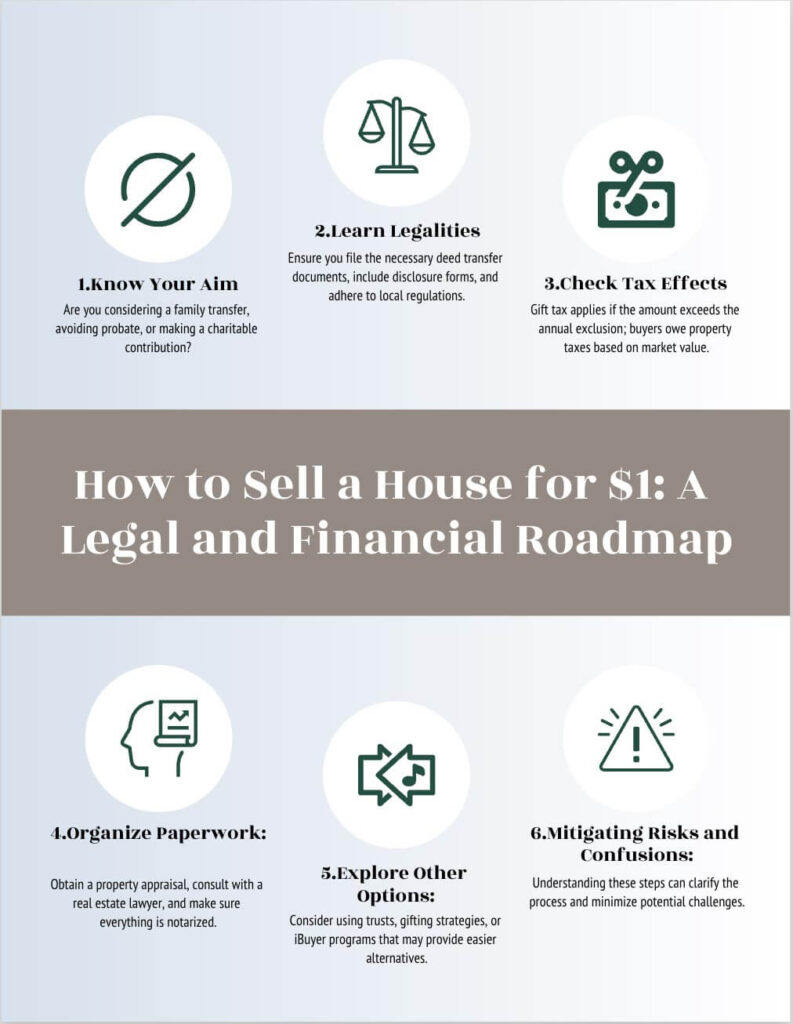
          Ever thought about selling a house for just $1? It’s an idea that raises eyebrows and sparks curiosity. While it might sound unusual, there are specific situations where this kind of transaction makes sense. People might consider this approach for reasons like transferring property within a family, avoiding lengthy probate processes, or even as a strategy to navigate financial challenges.

          But is it really that simple—or even legal? The process involves more than just setting a rock-bottom price. There are critical legal, financial, and tax implications to understand before taking such a bold step. Failing to grasp these details can lead to unforeseen consequences, including potential audits or legal complications.

          This guide dives into the key aspects of selling a house for $1. From understanding the concept to exploring alternatives, we’ll cover everything you need to make an informed decision. And if you’re looking for a hassle-free way to sell your home quickly and legally, iBuyer.com is here to help simplify the process.

          Instant Valuation, Confidential Deals
          with a Certified iBuyer.com Specialist.

            Sell Smart, Sell Fast, Get Sold. No Obligations.

            The $1 Home Sale

            Selling a house for $1 might seem like a gimmick, but there are legitimate reasons people choose this approach. Let’s break down what it actually means and why someone might consider it.

            What It Means

            Selling a house for $1 doesn’t mean the property is worth only a dollar. It’s a symbolic price often used in unique situations, such as transferring ownership to a family member or simplifying legal processes. Despite the low sale price, the transaction still needs to meet legal requirements, including formal documentation and adherence to local property laws.

            Common Reasons

            1. Family Transfers
              Passing property to children or relatives for nominal amounts is a common practice. This method can simplify the transfer process and may reduce complications compared to traditional inheritance.
            2. Avoiding Probate
              By selling or transferring property during their lifetime, homeowners can help heirs avoid lengthy and expensive probate proceedings.
            3. Charitable Donations
              Some property owners choose to donate homes to nonprofits or religious organizations, often setting the sale price at $1 to establish the transfer.
            4. Avoiding Foreclosure
              In financial hardships, homeowners may sell their property for $1 to a trusted party to maintain some control over the transaction and avoid foreclosure by lenders.

            Addressing Skepticism

            People often question the legitimacy of a $1 home sale. Is it a tax loophole? A trick to dodge legal responsibilities? The truth is, these sales are entirely legal as long as proper procedures are followed. However, it’s essential to understand that even a symbolic price doesn’t exempt the seller or buyer from obligations like taxes or legal fees.

            Is It Legal? Key Considerations

            The legality of selling a house for $1 depends on adhering to state laws and ensuring the transaction is properly documented. While the idea is unconventional, such sales are generally allowed as long as they meet certain requirements.

            Laws and Regulations

            Real estate transactions are governed by state-specific laws, which usually permit selling a property at any price the buyer and seller agree upon. However, authorities may scrutinize $1 sales for possible violations, like tax evasion or fraudulent intent. Ensuring that all legal steps are followed is crucial to avoid issues down the road.

            Documentation Required

            Even for a $1 sale, the following documents are typically required:

            • Deed Transfer Paperwork: A legally binding document that transfers ownership from the seller to the buyer.
            • Disclosure Agreements: A declaration of any known issues with the property, such as structural damage or zoning concerns.
            • Notarization and Witnesses: Depending on the jurisdiction, notarized signatures and witnesses may be mandatory to validate the transaction.

            Potential Legal Risks

            Selling a house for $1 might raise red flags with taxing authorities or lenders. Here’s what to watch out for:

            1. Undervaluation Risks
              Tax authorities may question the sale price, especially if it’s significantly below the property’s market value. This could result in audits or re-assessments of property taxes.
            2. Gift Tax Implications
              Selling at a nominal price is often considered a “gift” rather than a sale, potentially triggering gift tax obligations. Sellers should consult a tax professional to understand their liability.
            3. Mortgage or Lender Challenges
              If the property has an outstanding mortgage, lenders might not approve the sale. Mortgage agreements often include clauses that prevent sales without full repayment of the loan.

            Financial and Tax Implications

            Selling a house for $1 might seem like an easy transaction, but the financial and tax consequences for both the seller and buyer can be complex. Understanding these implications is essential to avoid unexpected costs or complications.

            For the Seller

            1. No Monetary Gain
              Selling for $1 means the seller doesn’t receive the property’s market value. While this might not matter in family transfers or donations, it’s an important consideration if financial gain was the goal.
            2. Gift Tax Risks
              The IRS may view a $1 home sale as a gift, with the “gift” being the difference between the market value and the sale price. Gift taxes could apply if the value exceeds the annual exclusion limit (currently $17,000 per recipient in 2023). Sellers might also need to file IRS Form 709 for the transaction.
            3. Loss of Equity
              The seller forfeits any accumulated equity in the home, which could have been used for retirement, investment, or other financial goals.

            For the Buyer

            1. Tax Liability
              Even though the purchase price is $1, the buyer may still owe property taxes based on the home’s assessed market value, not the sale price. Local authorities calculate property taxes using fair market value rather than the transaction amount.
            2. Capital Gains Considerations
              If the buyer eventually sells the property, they may face significant capital gains taxes. This is because the IRS calculates gains using the original purchase price (in this case, $1) as the cost basis, making the taxable profit much larger.
            3. Insurance Challenges
              Homeowners’ insurance providers base coverage on the market value of the property. If the home is significantly undervalued in the sale, securing adequate coverage could require additional documentation and justification.

            To summarize the financial and tax implications for both parties, here’s a quick comparison:

            Aspect For the Seller For the Buyer
            Tax Implications Possible gift tax if market value exceeds limits. Property taxes based on market value, not sale price.
            Capital Gains Tax No significant gains; minimal tax impact. Large taxable gain if the property is sold later.
            Documentation Needed Deed transfer, disclosure, and gift tax filing. Proof of purchase for insurance and tax purposes.
            Risks Audits for undervaluation, losing equity. Insurance challenges and potential tax liabilities.

            Example Scenarios

            1. Family Transfer
              A parent sells their $300,000 home to a child for $1. The IRS considers the difference ($299,999) a taxable gift. The seller must account for this in their lifetime gift tax exemption or pay applicable taxes.
            2. Charitable Donation
              A homeowner donates their house to a nonprofit and sets the sale price at $1. The donor may claim a tax deduction for the fair market value of the home, subject to IRS rules on charitable contributions.

            Alternatives to Selling for $1

            While selling a house for $1 might seem like a quick solution, there are often better, less complicated ways to achieve the same goals without triggering potential legal or financial pitfalls. Here are a few practical alternatives.

            1. Fair Market Value Sales

            Selling your home at its market value ensures transparency and avoids tax complications. If you’re transferring a property to a family member, you can still help them by gifting a portion of the proceeds or offering financial assistance in another way. This approach keeps tax liabilities clear and reduces scrutiny from authorities.

            2. Utilizing Trusts or Wills

            For inheritance purposes, setting up a trust or including the property in a will is often a better option than a $1 sale. Trusts can ensure the property is transferred smoothly while avoiding probate. A will, though subject to probate, provides clear instructions for property distribution.

            Benefits:

            • Maintains fair market value records.
            • Avoids immediate tax implications or audits.
            • Provides legal clarity for heirs.

            3. Gifting the Property

            Instead of selling for $1, you can gift the property outright. While this may still involve gift tax considerations, it eliminates the ambiguity of an undervalued sale. Make sure to consult a tax professional to determine how the value of the gift fits into your lifetime gift tax exemption.

            Example: A parent gifts a $300,000 home to their child. If the amount exceeds the annual exclusion limit, it counts toward the lifetime exemption of $12.92 million (as of 2023). Proper documentation ensures compliance.

            4. Selling to iBuyer Platforms

            If you’re looking for a quick, hassle-free way to sell your home without undervaluing it, iBuyer platforms can be an excellent alternative. These services provide competitive offers based on the home’s market value and streamline the selling process.

            Advantages of iBuyer Platforms:

            • Instant offers and fast closing timelines.
            • No need to undervalue your property.
            • Professional guidance through the transaction.

            Reilly’s Two Cents

            Selling a house for $1 might sound like a creative solution, but from what I’ve seen, it’s rarely as straightforward as it seems. While it can work in specific cases—like transferring property to family or sidestepping probate—it’s critical to fully understand the implications before moving forward.

            When people rush into these kinds of transactions, they often miss important details, like tax liabilities or the potential for legal complications. And trust me, the fallout can be messy—audits, disputes, or even unexpected financial penalties.

            Here’s What You Need to Know

            1. Talk to a Real Estate Attorney
              Laws vary widely depending on where you live. A good attorney will make sure you’re following the rules and have the proper paperwork in place. They’ll also help you avoid oversights that could cost you down the road.
            2. Get a Professional Property Valuation
              Even if you’re selling for $1, the property’s true value still matters. Taxing authorities look at market value—not the sale price—when calculating taxes. Having a clear valuation ensures transparency and protects both parties involved.
            3. Plan for Taxes
              A $1 sale often triggers gift tax rules. The IRS treats the difference between the market value and the sale price as a “gift,” and if it exceeds the annual exclusion, you could be on the hook for taxes. Consulting a tax professional is a must.

            Selling a house for $1 might feel like a shortcut, but it’s not always the easiest or cleanest path. There are often better alternatives, like gifting the property or setting up a trust, which can achieve the same goals with fewer complications. Whatever you decide, make sure to plan ahead and get professional advice.

            Conclusion

            Selling a house for $1 might seem like an unusual idea, but it’s often used in very specific circumstances like family transfers, avoiding probate, or charitable donations. While the concept is simple, the execution is anything but. Legalities, tax implications, and potential risks make it essential to proceed with caution and thorough preparation.

            If this approach appeals to you, make sure to seek professional advice. Consulting with a real estate attorney or tax advisor can save you from costly mistakes and ensure everything is handled legally and fairly. Whether it’s navigating gift tax laws, ensuring proper documentation, or understanding the long-term consequences, expert guidance is critical to success.

            Of course, selling your home doesn’t have to be complicated. If you’re looking for a fast and stress-free solution, iBuyer.com is here to help. We specialize in streamlining property sales, providing competitive offers, and making the process as smooth as possible.

            Have questions or ready to explore your options? Reach out today and let us guide you toward the best decision for your home.

            Compare Cash Offers from Top Home Buyers.
            Delivered by Your Local iBuyer Certified Specialist.

              One Expert, Multiple Offers, No Obligation.

              FAQs

              Can I sell my house for $1 to avoid taxes?

              No, selling a house for $1 is not a way to avoid taxes. The IRS views the difference between the property’s market value and the sale price as a “gift,” which can lead to gift tax obligations. Instead of helping you sidestep taxes, this approach may attract closer scrutiny from tax authorities, potentially complicating matters further.

              Is selling for $1 the same as gifting property?

              Not quite. While a $1 sale is often treated as a gift for tax purposes, gifting property outright can sometimes be a more straightforward approach. With a gift, there is no sale price involved, and the process focuses purely on the transfer of ownership. However, both methods require compliance with tax laws, and larger gifts may need to be reported using IRS Form 709.

              Will my mortgage lender allow a $1 sale?

              If there is still a mortgage on the property, selling for $1 could pose a challenge. Lenders usually require the outstanding loan to be fully repaid before approving any ownership transfer. This means you’ll need to carefully review your mortgage agreement and communicate with your lender to determine what’s allowed.

              What are the risks of undervaluing property?

              Selling a house for $1 carries risks, including increased chances of tax audits. Tax authorities may question the sale to confirm compliance with gift tax rules. Misreporting the property’s value can also result in penalties. Additionally, insurance companies base policies on market value rather than sale price, which could lead to inadequate coverage.

              How do I ensure a $1 sale is legally sound?

              To ensure everything is handled correctly, it’s important to file accurate and complete documentation for the transaction, including the deed transfer. Consulting with a real estate attorney can help you understand state-specific requirements and avoid potential issues. Full transparency with the buyer, especially in family transactions, is also key to avoiding disputes or misunderstandings down the road.

              The post Can You Sell a House for $1? Legalities, Taxes & Risks appeared first on iBuyer Blog.

              Powered by WPeMatico

              How to Estimate Closing Costs When Paying Cash

              Understanding the costs involved in buying a home is crucial—especially if you’re paying in cash. Many believe that skipping the mortgage process also skips all the extra fees. Unfortunately, that’s a costly misconception.

              Even cash buyers face closing costs, ranging from title searches to property taxes. These fees can quickly add up if you’re not prepared. Knowing what to expect not only keeps surprises at bay but also helps you budget wisely for one of life’s biggest investments.

              At iBuyer.com, we aim to simplify the home-selling process and give you clarity on closing costs, so you’re never caught off guard. Ready to dive in? Let’s break it all down step by step.

              Instant Valuation, Confidential Deals
              with a Certified iBuyer.com Specialist.

                Sell Smart, Sell Fast, Get Sold. No Obligations.

                What Are Closing Costs?

                Closing costs are the collection of fees and expenses you pay when finalizing a real estate transaction. They cover the services and administrative tasks required to transfer property ownership.

                There’s a common myth that paying cash eliminates all these fees, but that’s not the case. Even without a mortgage, you’ll encounter costs like title searches, inspections, and taxes. Think of these as the necessary steps to make your purchase legal and secure.

                Knowing these costs upfront is essential. It ensures that you’re fully prepared to complete your purchase without financial stress. Plus, understanding where your money goes gives you confidence in your investment.

                Why Do Cash Buyers Still Have Closing Costs?

                Paying cash might sidestep lender fees, but other expenses still apply. Many closing costs cover essential services that ensure the transaction is legal, secure, and seamless. These are necessary whether you’re financing or paying outright.

                For example, title searches verify that the property is free from legal disputes, while title insurance protects you from potential claims against the property. Escrow fees, property taxes, and recording fees ensure the transaction is documented and compliant with local laws.

                Additionally, local regulations may require inspections or taxes to be paid at closing. These costs aren’t tied to a mortgage—they’re tied to the property transfer process itself. Understanding this helps you see why these costs are unavoidable, even for cash buyers.

                Breakdown of Typical Closing Costs for Cash Buyers

                When paying cash, your closing costs are generally simpler than those for buyers using a mortgage. Here’s a breakdown of the common fees you might encounter:

                • Title Search and Title Insurance: Ensures there are no legal claims or disputes on the property. Title insurance protects you from future challenges to ownership.
                • Escrow Fees: Covers the neutral third party managing the transaction and funds during the process.
                • Property Taxes: Often prorated so both buyer and seller pay their share based on when the property changes hands.
                • Homeowners Association (HOA) Fees: If the property is in an HOA, you’ll need to settle any outstanding dues and transfer fees.
                • Homeowners Insurance: Although optional for cash buyers, securing coverage from day one is highly recommended.
                • Attorney Fees: In some states, an attorney must handle property transactions, adding another cost.
                • Recording Fees: Paid to the local government to officially register the deed and transfer ownership.
                • Inspection Fees: Typically optional, but these provide valuable insights into the property’s condition.
                • Optional Appraisal Fees: While not mandatory, an appraisal can help ensure you’re paying a fair price.

                These fees can vary depending on your location and the specifics of your purchase. Knowing what to expect makes budgeting a breeze.

                Methods to Estimate Closing Costs

                Estimating your closing costs doesn’t have to be a guessing game. With the right tools and strategies, you can get a clear picture of what to budget. Here are some practical methods:

                1. Apply the 3% Rule: A quick rule of thumb is to set aside about 3% of the property’s purchase price for closing costs. While not exact, this estimate works well for ballparking expenses.
                2. Use Online Calculators: Many websites offer closing cost calculators to provide tailored estimates based on your property’s location and price. These tools often factor in local taxes and fees.
                3. Consult Professionals: Real estate agents and attorneys have firsthand experience with closing costs in your area. They can provide detailed insights or connect you with resources for an itemized estimate.
                4. Request an Itemized Cost Sheet Early: When you’re deep into negotiations, ask the seller or escrow company for a preliminary breakdown of costs. This helps avoid surprises and ensures clarity.

                These methods not only give you an estimate but also empower you to plan your finances with confidence.

                How to Reduce or Negotiate Closing Costs

                Closing costs can be trimmed with a little preparation and smart negotiation. Here are some effective ways to cut down on these expenses:

                1. Review the Purchase Agreement Carefully: Look for fees that seem excessive or unnecessary. If something doesn’t add up, ask for clarification or removal.
                2. Negotiate Costs with the Seller: In a buyer’s market, you might ask the seller to cover some closing costs. Known as “seller concessions,” this strategy can save you thousands.
                3. Shop Around for Services: Title companies, attorneys, and inspectors often set their own rates. Get multiple quotes to ensure you’re not overpaying.
                4. Bundle Services for Discounts: Some title companies or escrow providers offer discounts when you bundle related services like title insurance and escrow management.
                5. Waive Optional Fees: For instance, if an appraisal isn’t required for your cash purchase and you feel confident in your offer price, skipping it can reduce costs.

                These tips can help ensure your closing costs are as lean as possible, leaving more cash for your home and future projects.

                Reilly’s Two Cents

                When it comes to closing costs, I’ve learned a few valuable lessons that every cash buyer should know. Here’s my personal take on navigating these expenses:

                1. Title Insurance Is Worth Every Penny: At first, I questioned whether title insurance was necessary. After all, isn’t a title search enough? But it only takes one story of someone facing ownership disputes to realize how vital this protection is. It’s a small cost for priceless peace of mind.
                2. Consult the Right Professionals Early: Whether it’s a trusted real estate attorney or a savvy agent, having the right experts in your corner makes all the difference. They can catch errors, highlight hidden fees, and give you a better estimate of your total costs.
                3. Negotiate and Question Everything: Closing costs aren’t set in stone. For my last transaction, I discovered I could avoid an unnecessary fee just by asking about it. Sellers and service providers are often open to adjustments—especially if you’re paying cash.

                When you’re mindful of the details and proactive in your approach, closing costs become manageable, not overwhelming. Remember: preparation is key!

                Conclusion

                Closing costs are an inevitable part of buying a home, even when you’re paying cash. But with a clear understanding of what to expect, they don’t have to be a source of stress. From title searches to property taxes, every fee serves a purpose in making your transaction legal and secure.

                By estimating costs ahead of time and using strategies to reduce them, you’ll be well-prepared to close the deal with confidence. And remember, investing in the right professionals can save you both time and money in the long run.

                If you’re looking for an easier way to navigate home buying or selling, iBuyer.com is here to help. Our team simplifies the process and provides expert guidance to ensure a smooth transaction. Ready to take the next step? Let’s get started today.

                Compare Cash Offers from Top Home Buyers.
                Delivered by Your Local iBuyer Certified Specialist.

                  One Expert, Multiple Offers, No Obligation.

                  FAQs

                  What are the major differences in closing costs for cash buyers vs. financed buyers?

                  Cash buyers avoid lender-related fees, such as loan origination and mortgage insurance. However, they still pay for essentials like title searches, escrow fees, and property taxes.

                  Are closing costs tax-deductible?

                  In most cases, closing costs for purchasing a home are not tax-deductible. However, some costs, like property taxes or mortgage interest (if applicable), may qualify. Consult a tax professional for specific guidance.

                  Can I waive any of these fees as a cash buyer?

                  While some fees are negotiable (like inspection or appraisal fees), others, such as recording fees and property taxes, are mandatory. Be sure to discuss options with your attorney or real estate professional.

                  What happens if I don’t buy title insurance?

                  Skipping title insurance exposes you to potential legal risks, such as ownership disputes or undisclosed liens. While not mandatory, it’s a recommended safeguard.

                  How does the location affect closing costs?

                  Closing costs vary significantly by location due to differences in state laws, property taxes, and local fees. Researching regional costs is essential for accurate budgeting.

                  The post How to Estimate Closing Costs When Paying Cash appeared first on iBuyer Blog.

                  Powered by WPeMatico

                  Guide to Rental Properties for Reliable Retirement Income

                  Investing in rental properties can be a powerful strategy for generating consistent retirement income. By creating a portfolio of income-producing properties, individuals can potentially enjoy a steady cash flow that supports their lifestyle well into retirement.

                  But let’s face it—every investment journey starts with clarity. Knowing your financial goals and understanding how well each property performs are crucial first steps. This isn’t just about buying properties; it’s about buying the right ones that align with your retirement plans.

                  If you’re considering this path, iBuyer.com offers tools and services to simplify the home-selling process. Whether you’re freeing up equity to invest in rentals or looking for an efficient way to sell your home, iBuyer.com has you covered. 

                  Compare Cash Offers from Top Home Buyers.
                  Delivered by Your Local iBuyer Certified Specialist.

                    One Expert, Multiple Offers, No Obligation.

                    Understanding Retirement Income Needs

                    Planning for retirement means thinking beyond the present. Start by evaluating your current living expenses—housing, food, transportation, and leisure activities. Then, project these costs into the future, factoring in inflation and any changes to your lifestyle.

                    For example, do you plan to travel more? Will you downsize your living space? Or perhaps you want to support your family financially. Each of these goals impacts the amount of income you’ll need to sustain your retirement dreams.

                    Next, calculate how much your retirement income sources—like social security, pensions, or investments—will cover. The gap between your anticipated expenses and income shows how much extra you’ll need to generate. This clarity is essential before diving into real estate investments.

                    Remember, the lifestyle you envision will drive your income requirements. Take the time to be honest about your goals and priorities so you can prepare accordingly.

                    Calculating Cash Flow per Property

                    When it comes to rental properties, cash flow is king. Cash flow is the money you keep after covering all the expenses tied to your rental property, and understanding it is key to a successful investment strategy.

                    The formula is straightforward:
                    Cash Flow = Rental Income – Expenses

                    Let’s break it down:

                    • Rental Income: This is the total rent you collect monthly.
                    • Expenses: These include your mortgage payments, property taxes, maintenance costs, insurance, and even an allowance for vacancies.

                    For example, let’s say you earn $2,000 per month in rent. Your monthly expenses (mortgage: $1,200, taxes: $200, insurance: $100, maintenance: $100) total $1,600. This leaves you with a monthly cash flow of $400.

                    Positive cash flow means your property is making money after all costs, which is essential for covering your retirement needs. On the other hand, negative cash flow can drain your savings and should be avoided.

                    Pro Tip: Always factor in an emergency fund for unexpected repairs or extended vacancies. Consistent cash flow, not just appreciation, is what keeps your retirement plan running smoothly.

                    Determining the Number of Properties Needed

                    How many properties do you need to comfortably retire? The answer lies in your desired monthly income and the cash flow each property generates. Here’s the simple formula:

                    Number of Properties = Desired Monthly Retirement Income ÷ Cash Flow per Property

                    Let’s look at some examples:

                    1. Modest Lifestyle:
                      • Desired income: $4,000/month
                      • Cash flow per property: $400
                      • Properties needed: $4,000 ÷ $400 = 10 properties
                    2. Luxury Lifestyle:
                      • Desired income: $10,000/month
                      • Cash flow per property: $500
                      • Properties needed: $10,000 ÷ $500 = 20 properties

                    Keep in mind that your cash flow will vary based on factors like property type, location, and management costs. Focusing on properties with strong cash flow potential can reduce the total number of properties you need to achieve your goal.

                    Pro Tip: Diversify your portfolio across different areas to minimize risk. If one market underperforms, your other properties can help balance your income.

                    Factors Influencing Property Performance

                    Not all rental properties are created equal. To make informed decisions, you need to understand the factors that directly impact how well a property performs and contributes to your retirement income.

                    1. Location and Market Conditions

                    The property’s location is a major determinant of rental demand and income potential. Look for areas with:

                    • Strong job markets
                    • Quality schools
                    • Low crime rates
                    • Amenities like shopping, parks, and public transport

                    Market trends matter too. A booming market can boost rental rates and property appreciation, while a declining one can lead to vacancies or reduced income. Research local real estate trends before committing.

                    2. Property Management Efficiency

                    Managing a property well ensures consistent cash flow. If you’re not keen on being a hands-on landlord, hiring a professional property manager can help. They’ll handle tenant screening, rent collection, and maintenance, but their fees (typically 8–12% of rental income) should be factored into your expenses.

                    3. Economic Factors

                    Broad economic conditions, such as interest rates, inflation, and employment levels, influence rental demand and property values. A strong economy generally benefits landlords, while a downturn may pose challenges.

                    4. Real Estate Trends

                    Changes in zoning laws, infrastructure projects, or neighborhood developments can significantly impact a property’s desirability. Stay informed about local and national trends to anticipate shifts in the market.

                    Pro Tip: Before purchasing, analyze the neighborhood’s rental history and future growth potential. A little research can go a long way in securing high-performing assets.

                    Financing and Leverage Considerations

                    Acquiring rental properties often requires financing, and understanding how to use leverage effectively can amplify your returns—but it comes with risks. Here’s what you need to know.

                    1. The Role of Mortgages

                    For most investors, mortgages are the go-to financing option. A well-structured loan lets you acquire properties with a smaller upfront investment, allowing you to use your cash strategically. Key considerations include:

                    • Loan-to-Value Ratio (LTV): Lenders typically require 20–30% down for investment properties.
                    • Interest Rates: Higher rates can eat into your cash flow. Shop around for competitive terms.
                    • Loan Term: Shorter terms (e.g., 15 years) have higher payments but reduce interest costs over time.

                    2. Benefits of Leverage

                    Leverage allows you to control a more valuable asset with less of your own money. For example, a 20% down payment on a $300,000 property ($60,000) lets you benefit from appreciation and rental income on the entire $300,000 asset.

                    When used wisely, leverage can:

                    • Increase your returns on investment (ROI).
                    • Enable you to scale your portfolio faster.

                    3. Risks of Leverage

                    While leverage can magnify gains, it also increases risks:

                    • Cash Flow Strain: High monthly mortgage payments can lead to negative cash flow if rent doesn’t cover costs.
                    • Market Downturns: If property values fall, you could owe more than the property’s worth (negative equity).
                    • Vacancies: Prolonged vacancies can make it challenging to meet mortgage payments.

                    4. Mitigating Risks

                    • Always aim for positive cash flow properties to cushion against market changes.
                    • Maintain an emergency fund for unexpected repairs or vacancies.
                    • Use conservative leverage ratios, especially if you’re new to real estate investing.

                    Pro Tip: Work with a financial advisor or mortgage broker who specializes in real estate to structure loans that align with your retirement goals.

                    Tax Implications and Benefits

                    Owning rental properties isn’t just about cash flow and appreciation; it also opens the door to significant tax advantages. Understanding these benefits can help you maximize returns and reduce liabilities.

                    1. Tax Deductions for Rental Property Owners

                    As a property owner, you can deduct many expenses related to your rental business, including:

                    • Mortgage interest
                    • Property taxes
                    • Insurance premiums
                    • Maintenance and repairs
                    • Property management fees
                    • Utilities (if paid by the owner)

                    These deductions directly lower your taxable income, increasing the profitability of your investments. Keep detailed records of all expenses to ensure you’re taking full advantage of these benefits.

                    2. Depreciation

                    Depreciation allows you to deduct the cost of your property (excluding the land value) over a set period, typically 27.5 years for residential properties. This non-cash expense reduces your taxable income without affecting your cash flow.

                    For example, if the value of your property (excluding land) is $275,000, you could deduct $10,000 annually in depreciation. This benefit alone can significantly offset rental income taxes.

                    3. 1031 Exchange

                    A 1031 exchange lets you defer capital gains taxes when you sell a rental property and reinvest the proceeds into another like-kind property. This powerful tool helps you grow your portfolio without an immediate tax burden, though it comes with strict rules and timelines.

                    4. Passive Income Tax Rates

                    Rental income is considered passive income, which is generally taxed at lower rates compared to active income. Depending on your overall income, this can lead to substantial tax savings.

                    5. Risks and Considerations

                    While the tax benefits of rental properties are attractive, you’ll also need to be aware of potential pitfalls:

                    • Paying capital gains taxes when selling without a 1031 exchange.
                    • Managing tax reporting complexities, especially with multiple properties.
                    • Dealing with recaptured depreciation if you sell a property at a gain.

                    Pro Tip: Work with a tax advisor or CPA experienced in real estate investments to ensure you’re leveraging all available tax advantages while staying compliant with IRS regulations.

                    Reilly’s Two Cents

                    As someone who has walked the path of selling homes and investing in rental properties for retirement, I can tell you firsthand: planning and patience are everything. Here are a few lessons I’ve learned that can save you time, stress, and money.

                    1. Start with a Clear Financial Plan

                    Before diving into real estate, map out your financial goals. Determine how much passive income you’ll need in retirement and how many properties it will take to get there. Setting realistic targets ensures you don’t overextend yourself financially.

                    2. Do Your Due Diligence

                    Not all rental properties are good investments. Always research the market, property history, and potential expenses. Look at comparable rents in the area to ensure the property will generate enough cash flow to meet your goals. Skipping this step can lead to costly mistakes.

                    3. Consider Professional Property Management

                    Managing properties can quickly become a full-time job, especially if you own several. Hiring a professional property manager can save you from the hassle of late-night repair calls and tenant issues, while also protecting the value of your property through proper maintenance.

                    4. Be Prepared for the Unexpected

                    Owning rental properties isn’t without its challenges. Vacancies, surprise repairs, and market fluctuations are part of the game. Keep an emergency fund to handle these situations without jeopardizing your retirement income.

                    5. Leverage iBuyer.com for Strategic Selling

                    When I sold one of my homes to fund my rental property investments, iBuyer.com streamlined the process. Their efficient home-selling tools saved me time and helped me secure the capital I needed. If you’re looking to free up funds for real estate investments, I highly recommend their services.

                    Conclusion

                    Rental properties offer a promising path to achieving steady retirement income, but success hinges on careful planning. From understanding your income needs and calculating cash flow to evaluating property performance and navigating financing, each step plays a vital role in building a sustainable portfolio.

                    The key takeaway? Start early, set clear financial goals, and be strategic about your investments. Diversify your properties, leverage tax benefits, and consider professional management to ensure your portfolio thrives even in the face of challenges.

                    Ready to take action? Begin your journey today by exploring iBuyer.com’s efficient home-selling services. Whether you’re looking to free up capital or invest in your first rental property, their tools and expertise can help you take the next step toward a financially secure retirement.

                    Instant Valuation, Confidential Deals
                    with a Certified iBuyer.com Specialist.

                      Sell Smart, Sell Fast, Get Sold. No Obligations.

                      FAQ

                      How do I calculate the cash flow of a rental property?

                      To calculate cash flow, use the formula: Rental Income – Expenses. Rental income is the total rent you collect monthly, while expenses include mortgage payments, property taxes, insurance, maintenance, and a vacancy allowance. For example, if your rental income is $2,000 and expenses are $1,500, your cash flow is $500 per month.

                      What are the risks associated with using leverage in real estate investment?

                      Leverage can amplify your returns, but it also increases risk. Common risks include negative cash flow if expenses exceed rental income, property value drops leading to negative equity, and financial strain during vacancies. Always ensure your cash flow is positive and maintain an emergency fund to manage these risks.

                      How can I minimize vacancies and ensure consistent rental income?

                      To minimize vacancies and maintain steady rental income, start by selecting properties in high-demand areas with strong rental markets. Set competitive rental rates by researching comparable properties in the area. Regular maintenance and improvements can help attract and retain tenants. Careful tenant screening ensures reliability and reduces turnover. If managing properties feels overwhelming, consider hiring a property manager to handle leasing, repairs, and tenant relations efficiently.

                      What are the tax benefits of owning rental properties?

                      Rental property owners enjoy several tax advantages, such as deductions for mortgage interest, property taxes, insurance, and maintenance costs. Depreciation allows you to deduct the property’s value over time, reducing taxable income. Consult a tax advisor to optimize these benefits.

                      How does property location affect rental income and appreciation?

                      Location determines demand, rent potential, and future appreciation. Properties in areas with strong job markets, good schools, and low crime rates typically perform better. Local infrastructure and economic development also play a role in increasing property value over time.

                      The post Guide to Rental Properties for Reliable Retirement Income appeared first on iBuyer Blog.

                      Powered by WPeMatico